About This Project
Desinged to promote economic access and inclusiveness for rural women, the Top City Enterprise biochar project is a gender-based climate action project with focus on building a resilient socioeconomic livelihood for rural women in Central Nigeria. The transformative biochar project is aimed at converting agricultural waste such as rice husk, corn stalks/cobs, sorghum stalk and rice straws into biochar, a carbon-rich solid, now widely used to improve soil biodiversity, tackle climate change, reduce overdependence on synthetic fertilizers and drive sustainable economic empowerment for rural women.
The initial phase of this project targeted 2000 rural young women farmers (made up of 200 corporative groups), across 38 communities in Central Nigeria, with about 46 women applying the enterprise skills developed through the project by esterblisihing their own micro biochar business. The convertion of solid farm-waste, an already abundant residue from crop harvests, into biochar offers a low-cost, high-impact climate solution for rural farmers, who are currently battling the impact of climate change. Results from the pilot across project sites showed that a ton of biochar, depending on the type of feedstock used, can sequester up to 1.5 tons of CO₂ equivalent. The biochar produced retains about 75% of its carbon content, effectively locking away approximately 1.20 to 1.50 tons of CO₂ per ton of biochar produced by these women.
"Over this period, the women have collectively produced an average of 22,000 tons of biochar... directly removing an estimated 28,000 tons of CO₂e from the atmosphere."
Project Goals
Empower rural women as climate champions and economic actors by transforming agricultural waste into biochar, thereby improving soil health for crop productivity, reducing greenhouse gas emissions, and building climate-resilient livelihoods.
Project Rationale
Biochar acts as a long-term carbon sink. Beyond carbon sequestration, biochar significantly improves soil physical and chemical properties, enhancing water retention, nutrient availability, and microbial activity. A ton of rice husk biochar can sequester approx. 1.2 - 1.5 tons of CO₂ on average, generating credits valued at $60 - $150 per ton in the VCM.
Project Components
Biochar Production
Demonstrated functional use of low-cost, women-friendly kilns to produce rice husk, corn stalks, and sorghum biochar across 10 pilot sites.
Training & Soil Impact
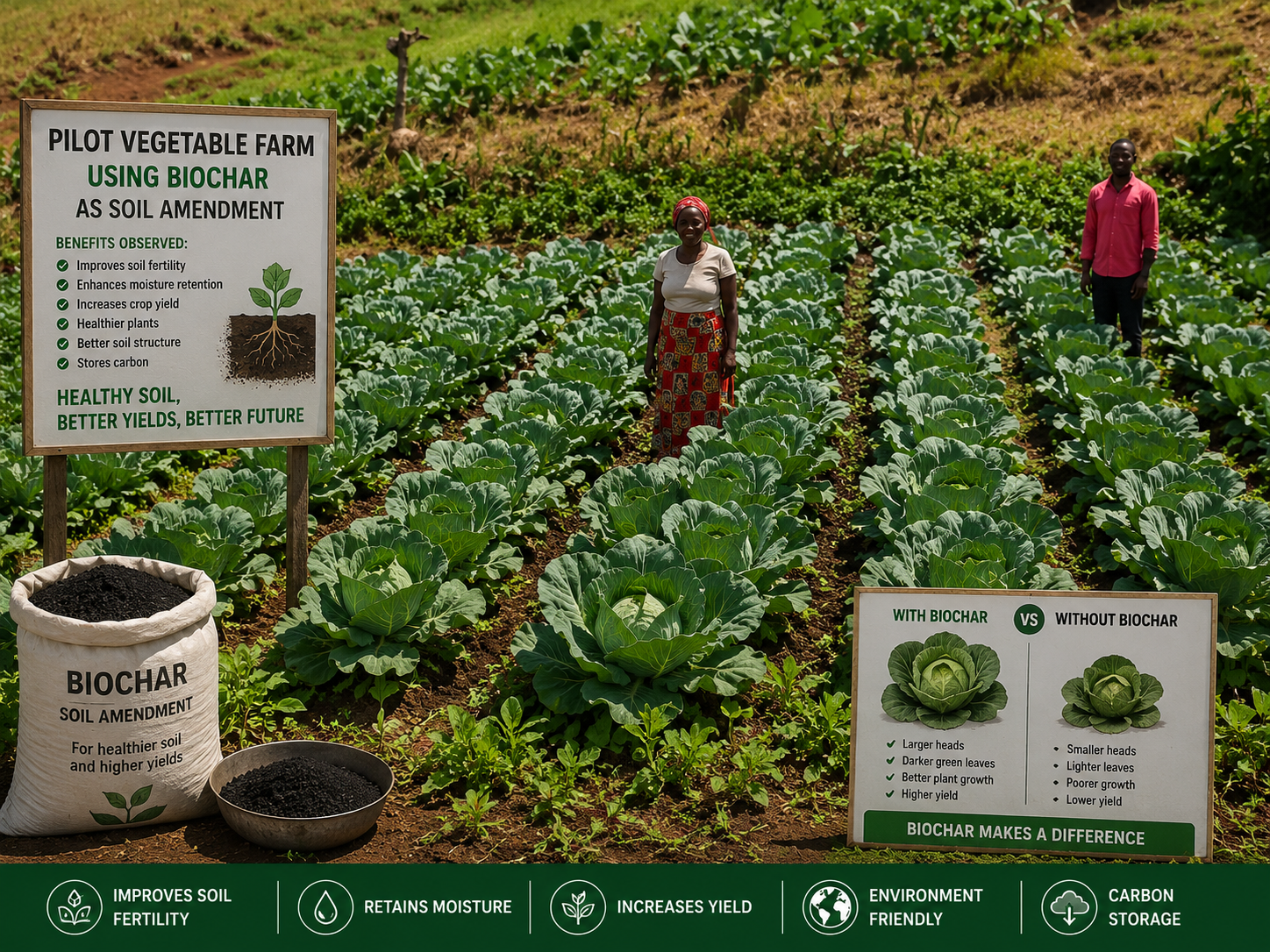
Delivered 10 workshops to 200 women. Soil trials showed an average water retention increase of 1.7% per 1% biochar added in pre/post tests.
Carbon Monitoring (MRV)
Implemented robust digital community logging coupled with external third-party validations for high-integrity carbon removal credits.
Circular Revenue Model
Balanced direct local unbranded biochar soil sales ($5-$15/ton) with premium VCM carbon credit offset shares to optimize smallholder income.
Impact Metrics
KPI Performance Target Analysis
- Yield Increases: Achieved an average increase in yield of ≥18% measured across 3 primary trial crop varieties (rice, maize and vegetables) depending on the baseline soil toxicity.
- Fertilizer Savings: Secured ≥30% savings in synthetic chemical inputs on demo plots using our biochar/organic compost integration blend.
- Direct Earnings: Enabled an average revenue per woman entrepreneur of ≥$75 per agricultural crop season.
The Prospect:
This agricultural biomass-to-biochar project presents a highly transformative and scientifically proven approach to improving smallholder farming for women and youth in Central Nigeria. By integrating climate-smart practices, enhancing soil moisture retention, and creating verified income streams, the project will drive long-term sustainability, food security, and resilience.